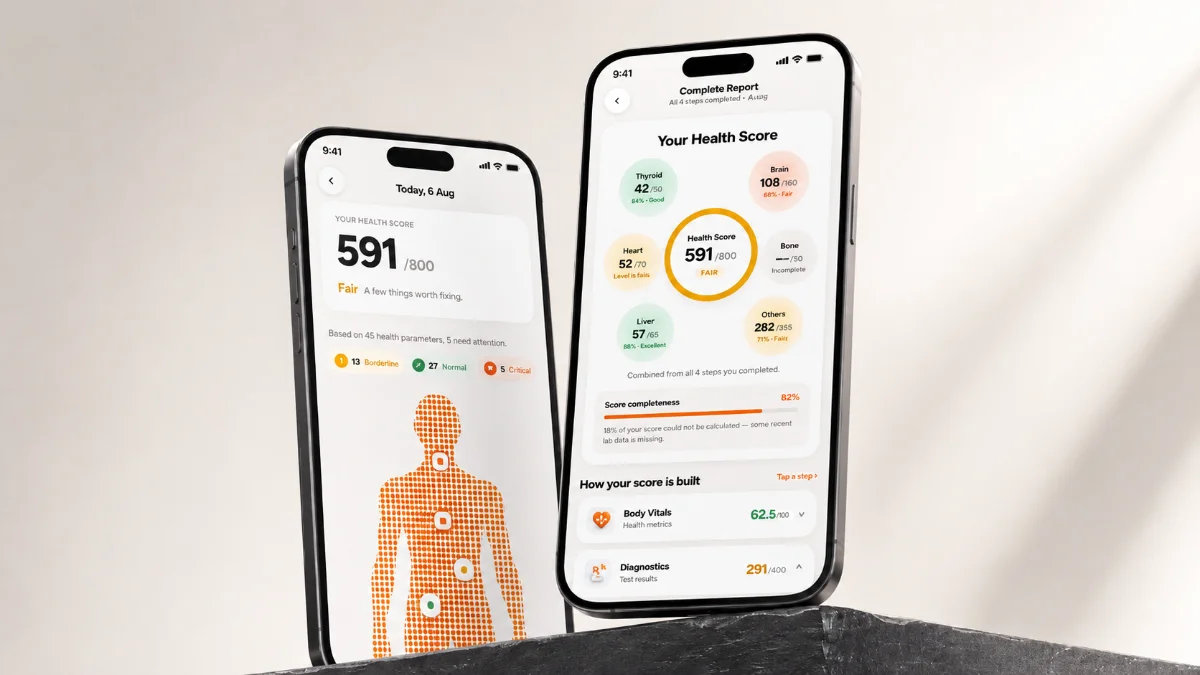
Selling obesity care, not another diet plan
I designed the mobile landing page for OHA’s obesity programme. The page moves the conversation from weight and BMI to a full health assessment, a named care team and support that continues between sessions.
Visual design
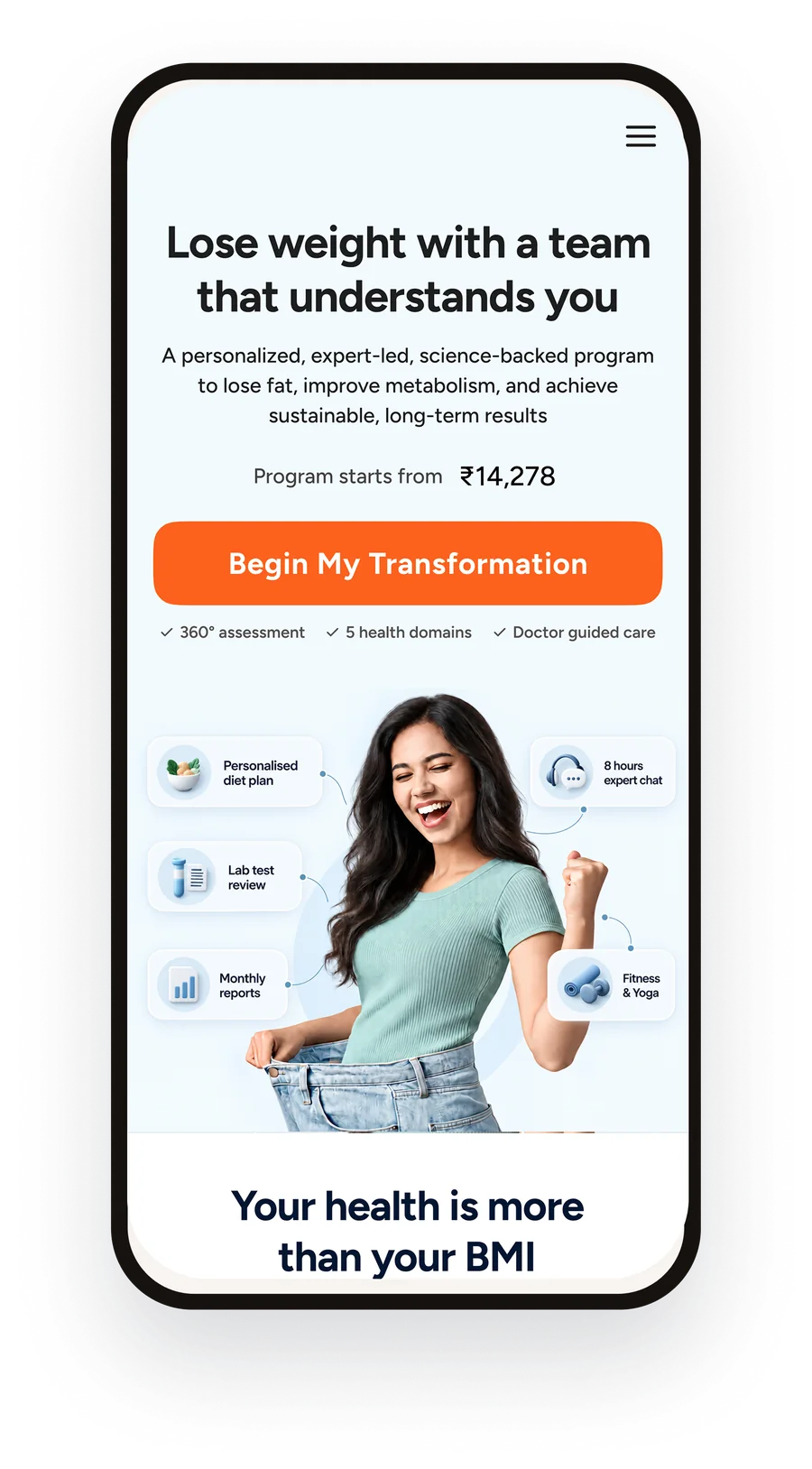
Most weight-loss pages sell a target weight. This one had to sell medical care. I built the page as one argument: your health is more than your BMI, here is how we measure it, here are the people who will look after you, and this is what staying with the programme looks like. Every section ends at the same next step, a free assessment.
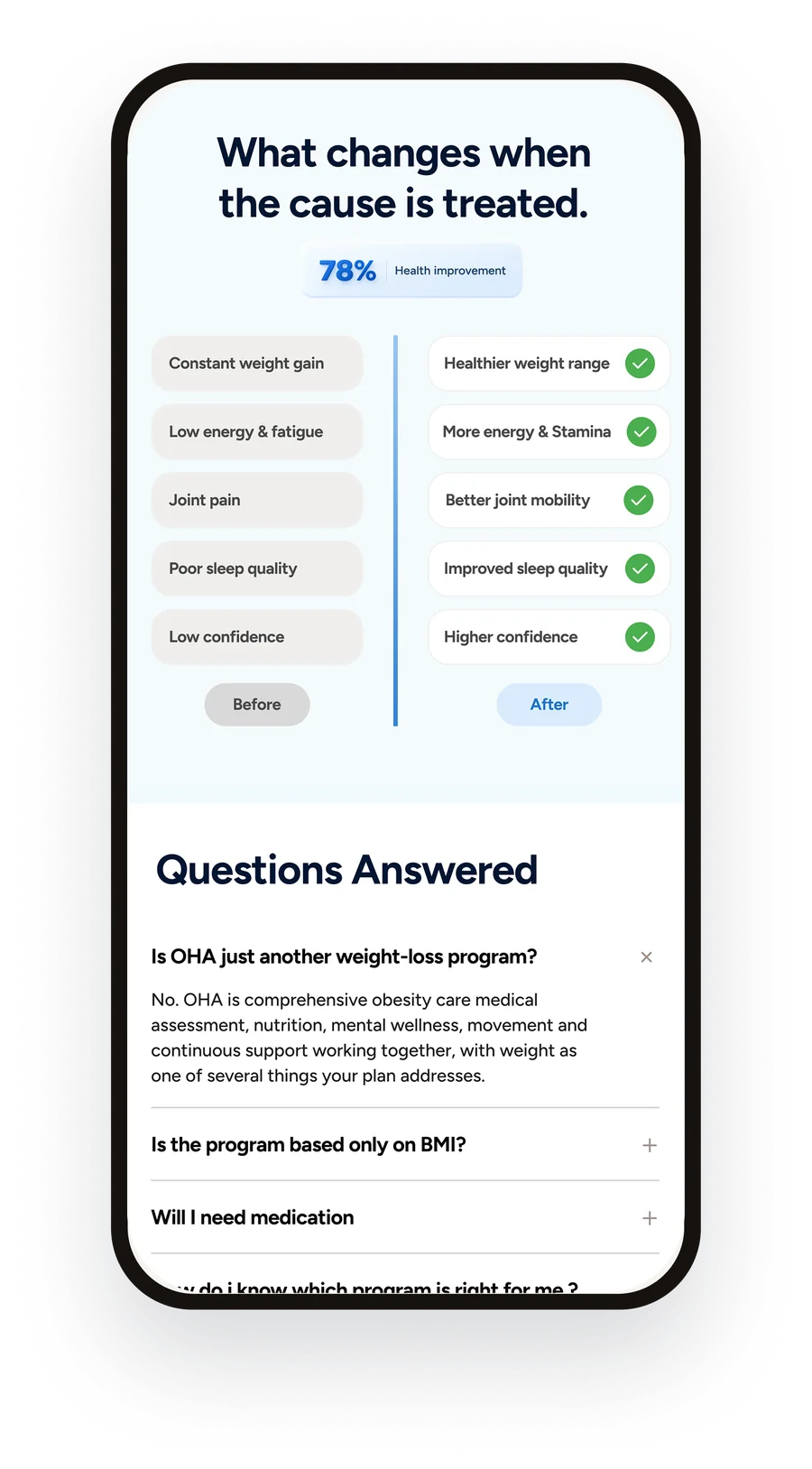
“Is OHA just another weight-loss program?”
That question came first in the FAQ for a reason. People looking for help with obesity have usually tried diets before, and most pages they land on look the same: a before photo, a target weight, a price.
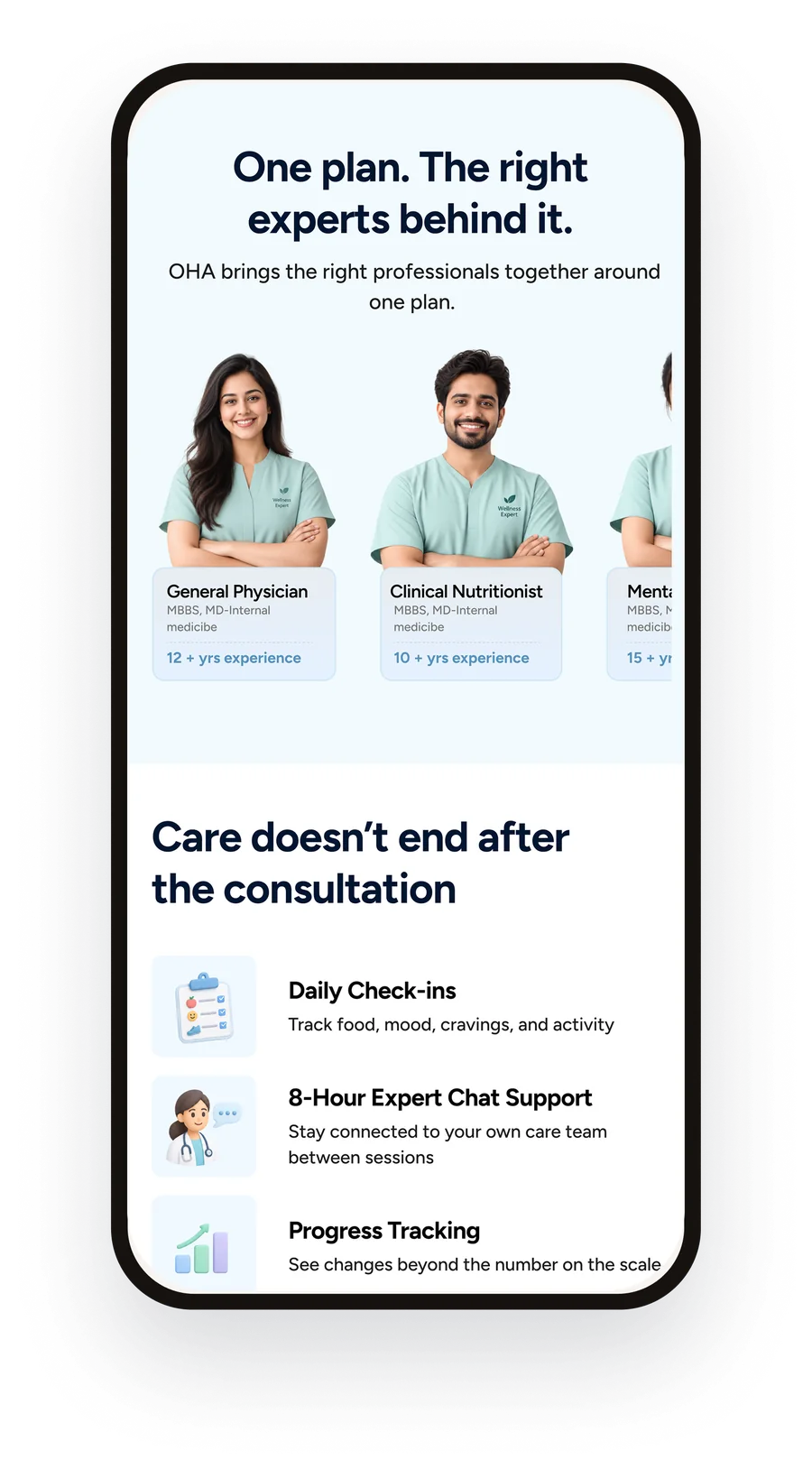
OHA’s programme is different in what it does. It assesses five areas of health, pairs each person with a doctor, a nutritionist and a mental-wellness expert, and stays in touch between sessions. The page had to show that difference within the first few scrolls.
Each section answers the question the previous one raises.
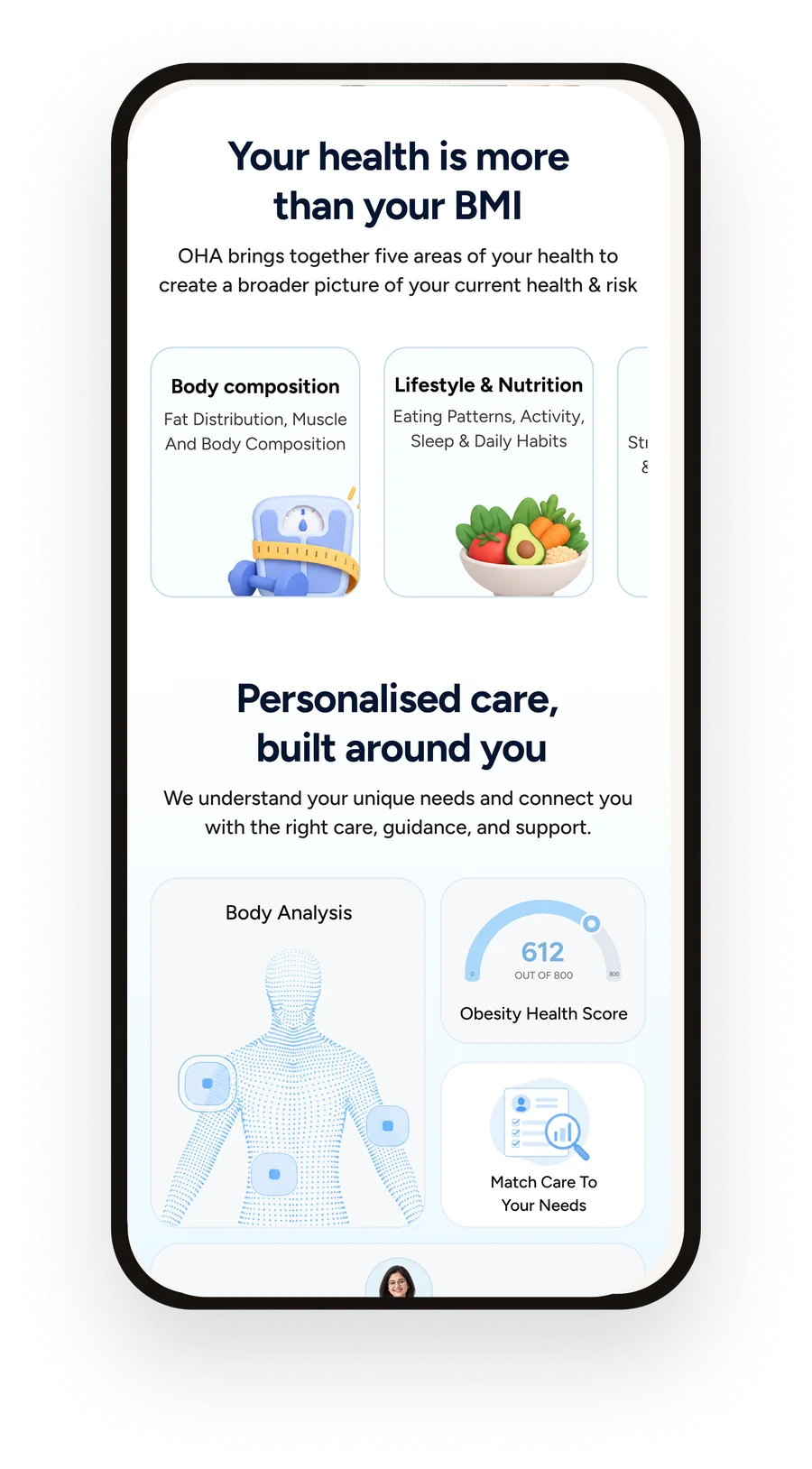
Your health is more than your BMI.
The first section after the hero shows the five health domains OHA assesses: body composition, lifestyle and nutrition, mental health and behaviour, blood tests and vitals. They add up to an obesity health score out of 800, which reuses the Health Score pattern people already see in the OHA app.
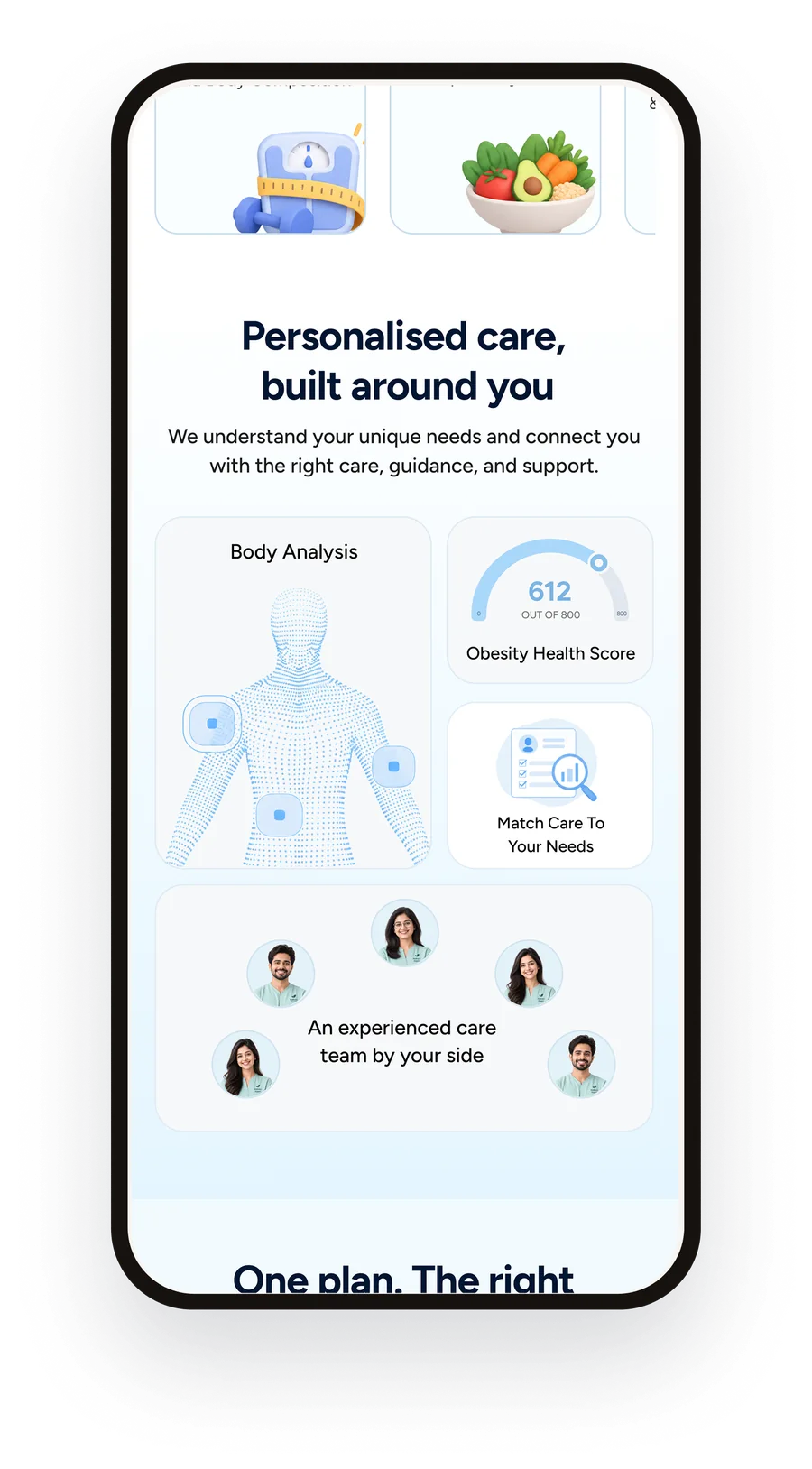
One plan. The right experts behind it.
Trust in medical care comes from people. The care team section introduces the general physician, clinical nutritionist and mental-wellness expert by role, qualification and years of experience, in a horizontal carousel that keeps the page short on mobile.
Care doesn’t end after the consultation.
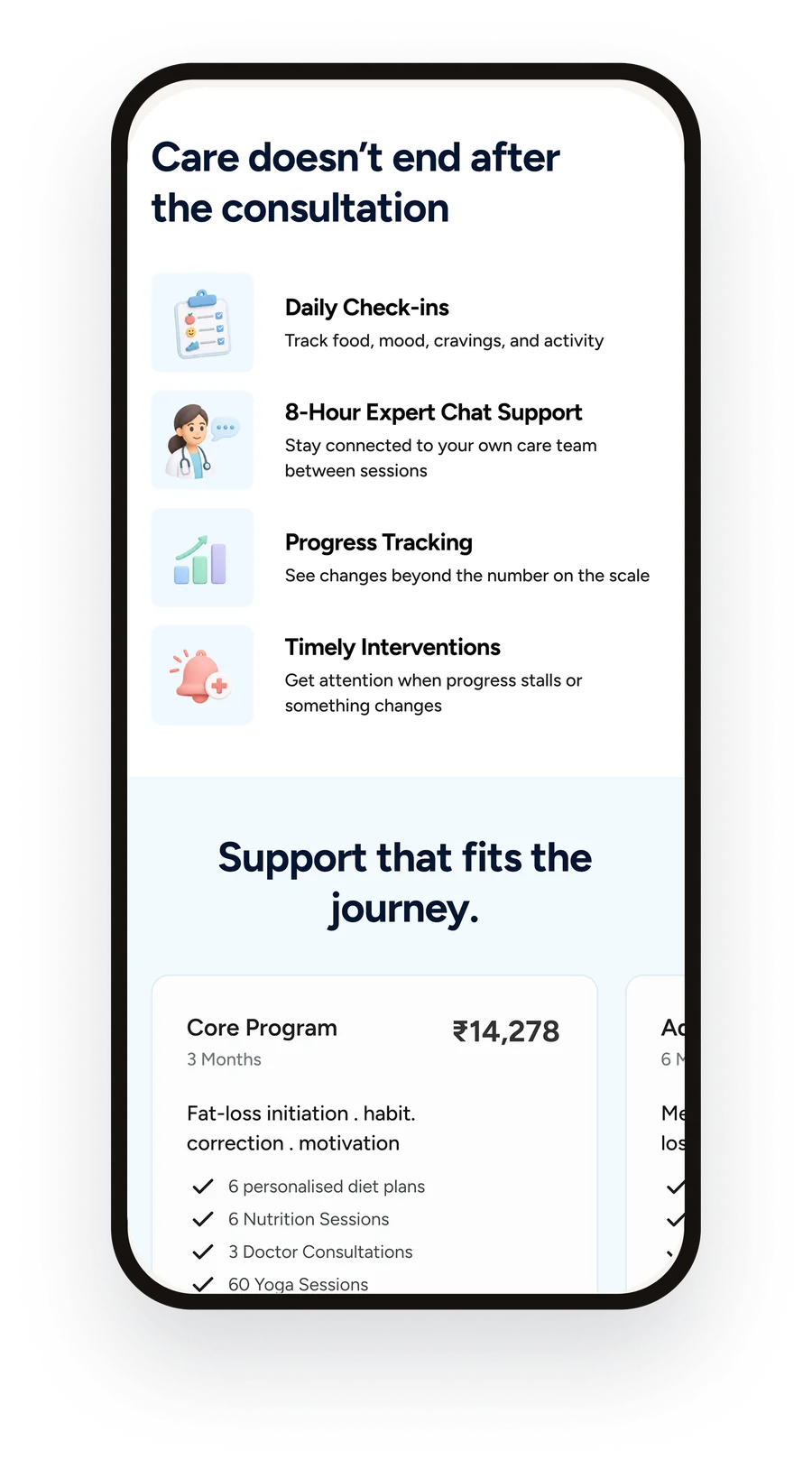
Diets usually fail in the weeks between appointments. This section lists the support that runs in that gap: daily check-ins, expert chat, progress tracking beyond the scale and interventions when progress stalls. The pricing that follows lists what each plan includes, so the ₹14,278 starting price reads as a set of sessions and tests rather than a subscription.
From first scroll to free assessment.
The page closes with outcomes framed as symptoms people recognise, such as low energy, joint pain and poor sleep, set against what improves once the cause is treated. The FAQ then answers the doubts that stop people from starting, and leads into the free assessment.